
The Architecture of Sovereignty
An archetypal gates-system for right relationship

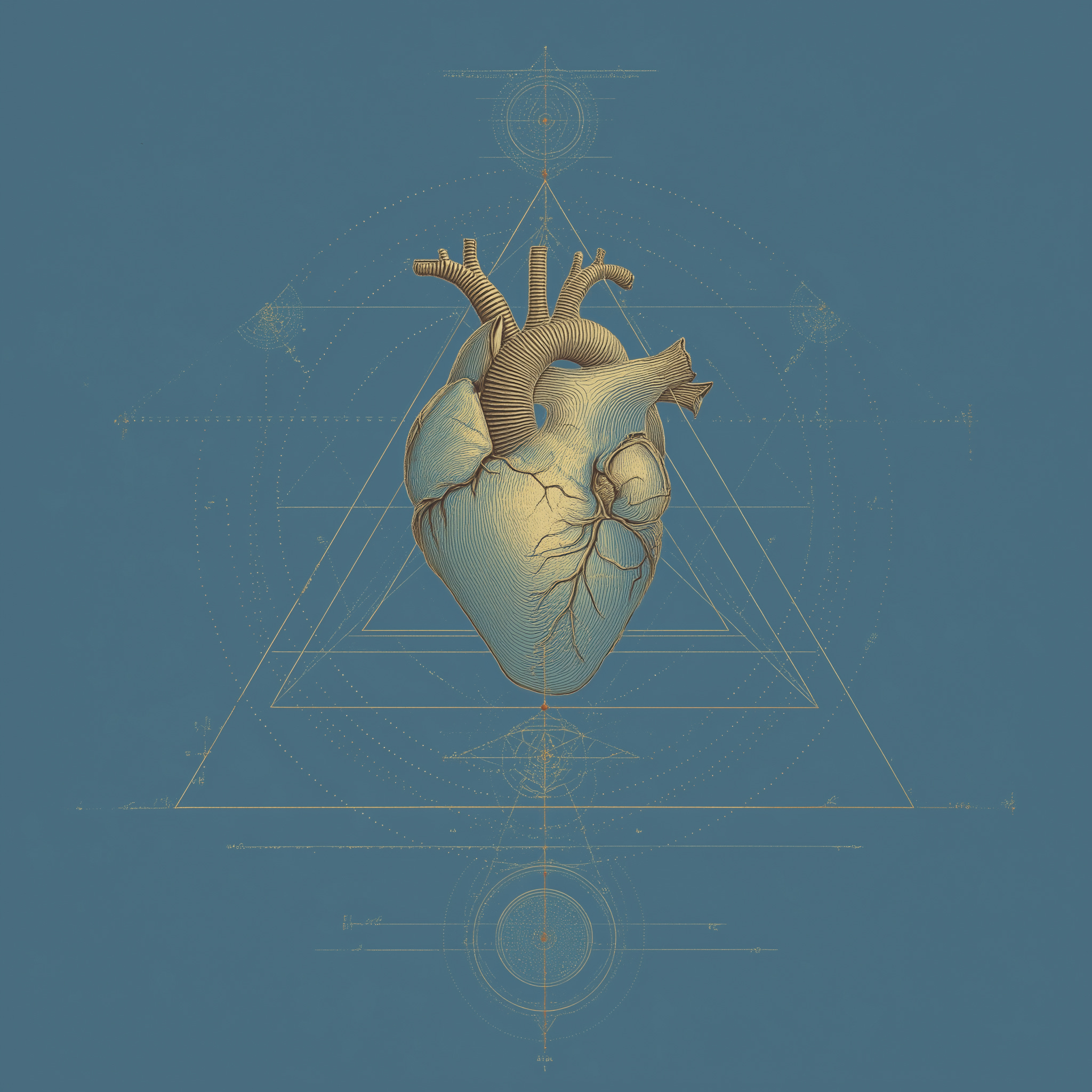
There is a structure around the heart called the pericardium— a thin, intelligent membrane that both holds and protects. I first learned of the pericardium through my acupuncturist, who explained that in Chinese medicine, it is known as the Heart Protector.
It keeps the heart in place while allowing it to move. It is soft, supple, alive—even translucent, letting light through. The pericardium’s job is to prevent friction—between the beating heart and the world around it— by creating a subtle layer of fluid.
I would call it the body’s living architecture of sovereignty:
The Living Gate
The metaphor of the pericardium struck me as an anatomical counterpart for the relational act of governing emotional boundaries, discernment, and safety— how we open, how we close, and how we meet life in motion.
When the pericardium is healthy, the heart can express joy without being overwhelmed. When it is weak or thin, we overextend; when it is rigid, we isolate. A healthy membrane is not about shutting the world out, but a filtration system.
What struck me most was my acupuncturist’s description of the pericardium not as a wall, but as a translator— the living gate between self and world, where love learns to meet the other without dissolving or withholding.
The pericardium is not armor—it is a soft structure of enough.
I come from a pattern of over-giving— the instinct to extend myself toward others until depletion. To hold, to rescue, to merge. For much of my life, I mistook availability for love. This is not something to shame, but to recognize as the body’s old strategy for belonging. Overextension is not generosity; it’s self-abandonment dressed in care. I realized I needed an architecture— something to help me discern what could truly be in right relationship with me, both personally and professionally.
Over time, I began to build what I now call my Three Gates— an energetic filtration system for right relationship, reciprocity, and alignment. These gates are how I orient in connection: friendships, collaborations, lovers, clients, opportunities, anything that asks for my energy. They are my symbolic pericardium— a structure through which presence, integrity, and reciprocity can move without collapse.
These gates are not meant as dogma, but as design principles— fluid, personal, and evolving.
I’ve also begun applying this same system to my business structures: how projects enter, how collaborations form, how energy circulates through the ecosystem I’m building. The same design that holds the heart can hold a life, a relationship, or an organization—because the heart is more than a physical center, it is a field of relation.
For many of us, especially those fluent in care, the task is not learning to open, but learning to close consciously— to remain in rhythm while discerning what truly belongs. The gates are not tests. They are clarities that offer protection where needed, expansiveness where needed. A natural geometry that allows for clear flow in and out.
Sovereignty is not a wall. It is rhythm— the ability to remain in true yes and true no, which is a rhythmic moment-by-moment discernment.
Never fixed, pulsing as life moves, staying in presence with what is real at each moment.
*You can read my definition of ‘Sovereignty’, among other key words for this emergent era in one of my recent posts.
The Three Gates
In relationship, Sovereignty is the art of remaining self-sourced while relating— the active practice of staying attuned to one’s own center amid the currents of connection, choice, and change.
Every day, people, projects, and opportunities approach us. Some arrive with resonance. Some come with distortion. For years, I tried to meet everything with equal openness, but that openness became exhaustion.
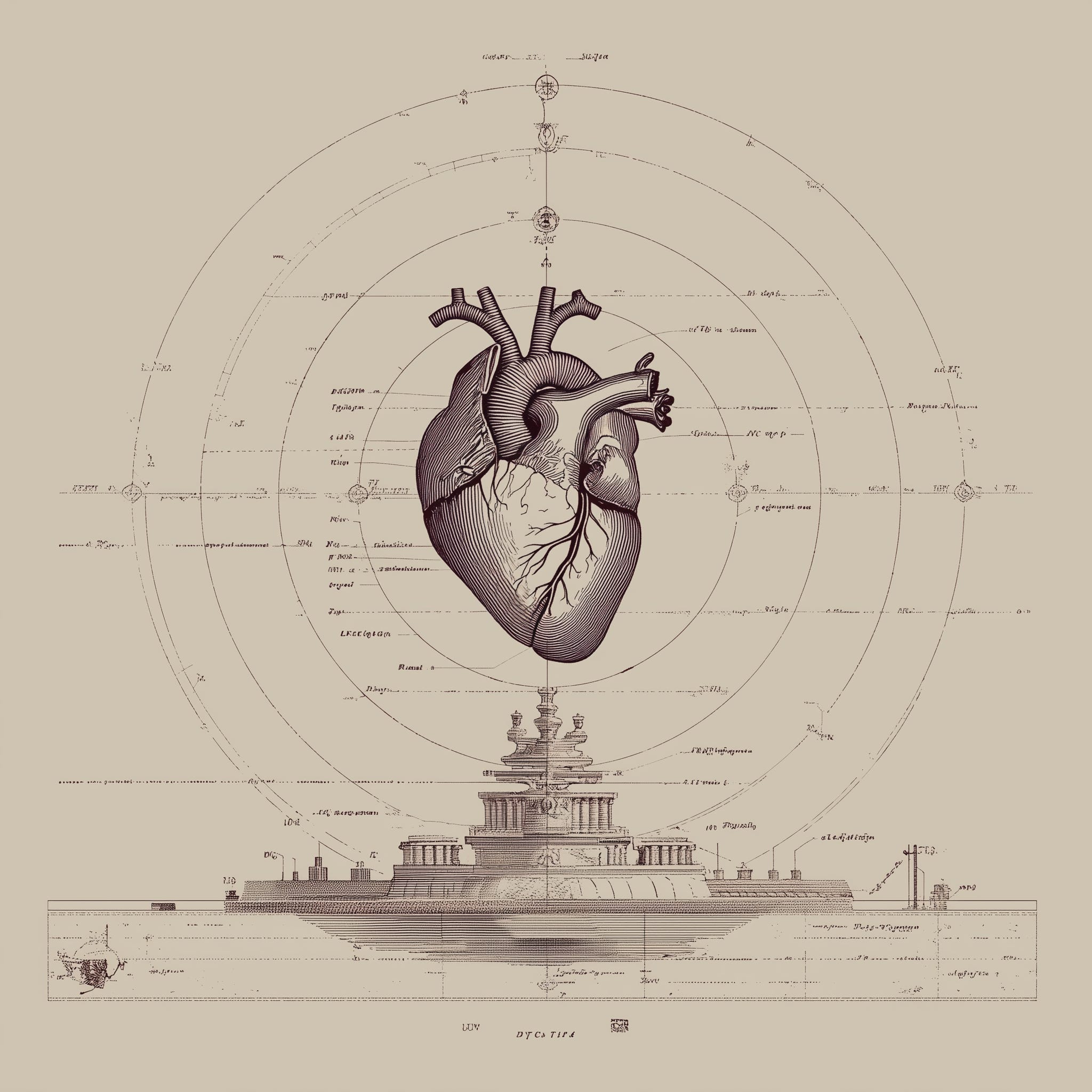
Now I listen to what approaches through three gates— the same way the pericardium listens before the heart opens.
These gates are not barriers; they are listening structures. Each one asks a question. If the answer is clear, I can proceed with trust. If not, I know where the work is— in the other person, or in me. I investigate myself truthfully and take responsibility over what is mine.
They are not commandments, just coordinates.
You might find that your gates have different names, or that they shift over time. But I offer you these three to see your own pericardium reflected back.
Gate One: Recognition
The first gate asks: Am I allowing myself to be seen — and when someone looks, do they meet what is true?
This gate is about right recognition— not only being seen, but allowing the real to be visible.
In my earlier life, I shaped what others could see. I offered softened versions of myself— masks of warmth, masks of capability — ways of meeting others’ expectations while hiding the complexity underneath. They saw the reflection I offered, not the wholeness underneath.
Now, recognition begins with me. When I stay in essence— the brilliance and the strangeness, the tenderness and the strength— I create the conditions for right seeing.
Some will glimpse only part of me, and that’s all right. True recognition does not require full comprehension; it requires resonance.
Those who see enough of what is real can pass through this gate, for seeing deepens with time and trust. But I no longer offer distortion as invitation. I no longer contort myself to be legible.
Recognition asks for courage on both sides. Recognition, I’ve learned, is a mirror. It asks both of us to meet with clear eyes and open presence— to risk being seen and to choose seeing, which is often uncomfortable.
Not everyone is ready to see, and that is all right. If recognition is absent, there can be no authentic exchange. This gate reminds me that I can meet others only as deeply as I am willing to be seen, and as the other is willing to meet what is real.
When I am seen clearly, I can offer trust.
When recognition is mutual, I let the deeper layers of my work and heart become visible— I share what is tender, what is true— but I no longer offer that transparency to those who cannot recognize what is here.
Gate Two: Reciprocity
The second gate asks: Can energy move both ways?
Love, labor, creative force— all of it circulates best in ecosystems where each node gives and receives. Without reciprocity, the field collapses into extraction.
In the past, I confused generosity with overflow. I poured myself into others without realizing the current had nowhere to return.
Reciprocity is not keeping score; it’s keeping rhythm. It’s the pulse that keeps relationships alive. When I give, I must also be able to receive. When I hold space, there must also be space for me to rest.
This applies in every domain— friendship, collaboration, business. The second gate asks whether energy flows naturally, or if one side is always feeding the other. It helps me locate imbalance before depletion.
When this gate is open, there is circulation, not sacrifice. It is the gate that teaches me how to stay generous and resourced.
When energy flows both ways, I can offer devotion.
When reciprocity is alive, I give my full care, creativity, and consistency. I become steady current— clear, nourishing, alive. But I no longer pour where the vessel is cracked, or where the current only pulls outward.
Gate Three: Right Timing
The third gate asks: Is this aligned in time?
Even the most resonant connection can falter if it arrives out of rhythm.
This gate protects me from urgency— the false fire that says now or never.
Right timing has its own hum. It does not demand; it invites.
The heart follows the pulse of the cosmos. In life, timing is that pulse— the pendulum that ticks as the heart beats.
When I rush to meet what is not yet ripe, I bruise it.
When I hold back from what is ready, I lose the current.
Right timing often asks for quiet— a pause long enough for the signal to clarify.
It asks me to check: Is this door opening from mutual readiness, or from fear of missing out?
This gate has saved me countless times. It allows me to act decisively when something is true— and gracefully step back when it’s not yet time.
When this gate is open, movement feels effortless.
When the timing is right, I can offer momentum.
When something aligns in time, I bring my full force— the precision of my action, the power of follow-through, the fire of creation. But I no longer rush the ripening; I let readiness lead.
And when it is time, the movement unfolds itself.
Together, these three gates form the architecture of sovereignty — not walls of separation, but a living system of rhythm, breath, and discernment.
Presence is what holds the gates open— the quiet awareness that allows recognition, reciprocity, and right timing to move as one. They are a living orientation device in staying open without leaking, giving without depletion, loving without losing form.
May this frame serve you as it has served me.
With the rhythm of the heart between us,
Saga
I am really thankful for this sharing Saga, especially your discussion of the first gate. In reading and reflecting, I see that my awareness of the second and third gates has actually been much more intact, but it is only very recently that I have begun to explore what the first gate — the threshold of true recognition — can offer, as I allow myself to be present through that doorway of being truly seen.
Oh Saga… this is Divine Golden Honey nectar… I feel like I’m sipping the sacredness of Love’s truth. The medicine. The wisdom. The LOVE. The Heart. Thank You! May your sacred pericardium be flooded with reciprocity in divine timing and alignment for this glowing tone you sing and mirror. Bless you & thank You!
P.S. this art is stunning, too. I continue to be oh so grateful to receive the messages you generously share and scribe. I’m going to be sitting with this for a long time… another piece to the puzzle of pleasure/pain and all you’ve gifted me in Omphalos, workshops, and beyond. 🤗🤗🤗🤗🤗🤗🤗 thank You, Saga. Every blessing to You 🤍🌈✨🌹